Sunday, April 11, 2010

It Was a Dark and Stormy Night. Really!


It’s 2am and I’m anxious for the LBI lighting crew to lift a half-ton truss of colored spotlights 30 feet above me.  I'm time-lapsing the building of a stage and two hours had passed with little movement.

Time-lapse gets pretty dull when nothing moves.

Although tonight’s installation is for the launch of a new product, it will still be quite an extravaganza of smoke, light and sound.  A rock show without the band.

One of my first time-lapse project was for a production company working with U2.  The group was slated to appear at Giant’s Stadium deep in the New Jersey Meadowlands at the beginning of their Stadium Zoo Tour.  A producer named Ned from Dreamchaser Productions in Dublin, Ireland called looking for someone to do the deed.

I asked, “What does it pay?” and he responded "Six grand.",  after which I suggested that I was the perfect one for the job.

I ran off to buy my first time-lapse camera and as such, began my new specialty.

On the early gigs I was using inexpensive super 8 film cameras, often with as many as 6 to 10 cameras in use at any one time.  Each camera needed to be locked at a fixed position and was usually mounted on a tripod or a super clamp, pointing in the direction where different events were presumed to unfold.

Time lapse, for those unaware of the technique, is the process of shooting one image at a time at a set rate, say, one frame every five seconds and then playing it back at the normal speed for the format you are shooting in.  For film it would be 24 frames per second (fps) and if you are shooting video, it is usually 30 fps.  The result is that everything you have filmed is now showing up at a much faster rate.  Clouds form and zoom by the camera at breakneck speed, city traffic will race down the streets and with amazing grace, flowers bloom in seconds.  

Often, the difficulty in creating a time-lapse is having the patience to wait for an event to unfold.

At times, it works out just right and another time someone might park a truck right in front of your shot and kill it, but the results are worth the challenges, as time lapsed images can be both beautiful and fun.  The simplest movement can take on new life when ramped up several times its normal speed.

The first time lapse films that I worked on only used one camera.  It was locked in a singular position and from that one angle, you might witness the construction of a building or amusement park ride while shadows shifted from west to east and clouds flew by.  This type of rig became pretty boring to me after a while and soon after, I began using several cameras so that later, I could edit between the camera positions.  This, along with a cool music track created a fun experience.


Eventually, I began to walk around, placing cameras in  multiple locations in the hopes of capturing short term movement.  Like a back-hoe digging a foundation or a steel column being lifted into position.   I would spend many hours walking between the different cameras to make sure they were still working, that there was still enough film or tape left and finally, to check that their position was still valid.

Time lapsing the construction of a roller coaster for Six Flags was a fairly slow moving process and in the case of Kingda Ka, the worlds tallest and fastest coaster, it took all of that winter.  As there was not enough money in the budget for us to be there daily, we would try to arrive on days that a major element of the ride, like a giant piece of steel was about to be lifted into place and it always seemed to happen at first light.  We froze our butts off.

Still, Sarah and I rarely found it boring and it became a challenge anticipating how the slow moving action in front of me would play out in high speed time lapse.


In the case of U2, time lapse was only part of the story.

It was day three at Giant Stadium and the rain had been coming down for hours.  My cameras were all wrapped in plastic bags and the summer heat was causing the lenses to fog.   Finally, there was a break in the weather and the backing tracks from “Real Thing” began to wail over the PA.  The band appeared on the B-stage which was situated out at the 50 yard line.  

I desperately wanted to get some close-up shots for myself, so with my small Hi-8 camera in hand, I slowly moved through the shadows towards the stage.  I had the Edge in my viewfinder when suddenly Bono abruptly raised his hand, halting the rehearsal. 

“You there, Mr Tiffen".  (I had a Tiffen hat on.)  "Is that an 8mm camera?".  He spoke very politely, but his voice boomed loudly over the monitors.  I was positive this could be heard on the NJ Turnpike.


I was like, “S***t!  Busted!”  

Then Bono gestured and asked “Wouldn’t your shot look better from up here?”

My eyebrows went up.  “Really?” 

At this very moment, my battery light is blinking and when I check, I find that I only have three minutes of tape left. 

Raising my finger I shouted “Just a minute!” and ran off to retrieve my case on the sidelines.  The band must of thought I was a lunatic.  To assure them that I was, I tripped and slid about 6 feet on the wet tarpaulin, camera held high like Miss Liberty.  


Standing up, I shouted "I'm good" and looked over to where I thought my assistant John Decker was standing with our gear, but he was no where to be seen.

I was mortified!  So now, with pants jacket soaked, I turned and ran back towards the stage.


Approaching the stage, Larry Mullen stepped out from behind his drums to give me a hand up to onto the platform after which the band finally went on with their practice while I proceeded to roll off those last three minutes of tape.  To be honest, it was so cool having them in my own viewfinder that I pretended to shoot for another five.  Then with a wave of thanks, I slipped back into the shadows.

I have worked on three different U2 tours since and fortunately, no one has ever reminded me of my brilliant slide, diagonally, across the forty yard line. 


Time lapse has become much more common since then and much simpler to achieve.  Many, simply shoot long clips with their video cameras and then speed up the footage in their non linear editing systems.  Others are using DSLR cameras to achieve the same technique by using the camera's built in intervalometer.  Regardless of the method, it's still important to think in time lapse to get the best results.

To see some of of our time lapse films, please visit our website at www.duckyou.com 

Back at the launch site things are finally getting back underway.   The chain drives above me have begun to grind and any second a 50 foot lighting truss will be lifted into position.  

Roll the cameras!

www.duckyou.com
www.duckem.com

http://pro.sony.com/bbsc/video/videon.do


Saturday, April 10, 2010

Family Matters

When I opened my first studio, I worked more hours than I ever could have imagined.  Sometimes, after photographing for an entire day, I would then spend hours in the darkroom printing all that I had shot.
Digital was still a long way off, but whether your hands are immersed in Dektol or your fingers are mousing away at Photoshop, time has a way off slipping by when you're concentrating on your work.

At 2 am, talk radio was not only a companion, it was the only thing keeping me awake, yet of all the hours I spent listening, only one program remains clear to this day.  I was listening to a radio host named Barry Farber and on this particular night he was talking about making a recording of his father.

Now in today's electronic world, picking up and using a video camera is a pretty common thing.  I mean most people's phones can shoot video now, but in the mid 1980s, the technology wasn't there and he was talking about using a audio cassette tape recorder.

But all technology aside, I found his discussion both brilliant and illuminating.  He was talking about recording the voice of his father so that future generations of his family could hear his voice and perhaps a little family history.  Something that more than often, gets lost.

You may have a recording of your grandmother holding your child as an infant, but what format is it on?. VHS?  VHS-C?  Hi-8?  Does that camera still work and if it does, will the tape still play after laying in the basement since you replaced it with a DVD player?

Many of us "filmmakers" have watched hours of documentaries on PBS or the History Channel television, but rarely have considered documenting our own histories?  And if so... Why not?

You might also be quite surprised at some of the things you learn about your grandmother or grandfather.  Believe it or not, they were kids once, too.

I have a friend named Rob Katz and he's made a business out of recording family histories.  He calls his company Small Talk Productions  Small Talk Website  and he creates delightful films about other folk's families.   He calls it "Oral Histories" and although Milton Shwartzberg might not have held the fate of the empire in his hands like Winston Churchill, his own life experiences might be just as interesting to his family.

I had the pleasure of filling-in as Rob's DP last year and to my surprise, it was an interesting shoot.  Rob's line of questioning was well researched both with other family members and the prevalent history during the time his subjects were growing up.  This gave them something to relate to and also helped jog their memory a bit.

I remember the sound and smell of the Revere projector that my father used to show us the family films.  There was always a mall amount of smoke rising above the machine as dust would burn off the bulbs.

One of the unique things about old style 8mm home movies, was that the camera carried a very short load of film.  Usually between 2:40" and 3:20", depending on the speed the camera was set to and due to the expense, it was pretty rare to simply blow an entire roll of film on one event.  So, it was not uncommon to find shots of birthdays, weddings, family outings, your grandparents the beach and Niagara Falls, all on one 50 ft. spool of film.

The jumping from subject to subject was part of the fun and we always knew what we were looking at because my mother and father would keep a constant narration in flow,  discussing how dirty the pool was or how much weight my aunt gained.

Which brings me back around to recording your family.

Wouldn't you like to know what your great great grandfather sounded like.  Don't you think your kids will, when they grow up?  Think ahead.


With the passing of my own mother, I now realize that my one year old daughter will probably not remember the sound of her grandmother's voice.  We will tell her all about grandma and there will be plenty of home movies and photographs, but it would have been nice to have an audio recording, as well.

My suggestion is to create a simple time capsule.  Include shots of the current objects in your living room or kitchen.  Include current events, like a newspaper heading and shots around your town.  It may seem like ordinary stuff now, but very shortly it will change and disappear or be covered up by something new.  Plan your shots well so that you can use them in your family documentary.

Who knows, maybe in a few years (when you become famous) the History Channel will come looking for your personal b-roll or at the least, it will be fun to look back and reminisce.

www.duckyou.com
www.duckem.com

Monday, April 5, 2010

Following the Footsteps of Robert Flaherty

I have a weather app on my iPhone that shows the current weather conditions in some of the more interesting locations that I have filmed or photographed at, outside the New York area.  Much of the time it is little more than a conversation piece between myself, Sarah and an assistant or two that traveled with me.  It’s fun to add a “weather snapshot” to a story I’m relating and this particular app cost under a buck.

Usually, if you’re down to talking about the weather, it is already pretty a boring conversation, except when the location is Igloolik.

I could have easily guessed from the name that we would not be filming in a tropical paradise, yet, it has to be one of the most beautiful locations I have had the privilege to film in.

To take a step back for a moment, a soft-spoken and often silent director brought me onboard the project after I had shot some interviews and B-Roll for him in Manhattan.  Mac Dara O’Curraidhn, was from Galway, in the west of Ireland.  He was working on a documentary that was following the footsteps of legendary filmmaker, Robert Flaherty.  

"Flaherty was an American filmmaker who directed and produced the first commercially successful feature length documentary film, Nanook of the North (1922).   Of the eleven completed filmed that Flaherty produced, only Nanook of the North had commercial success."

Something he desperately tried to reproduce in the other ten. 


Dr. Brian Winston, a brilliant, feisty little British gentelman, penned our script.  He is an Emmy winning writer, scholar and author of several books on the subject of film.  He was also the Dean of Communications, at the University of Lincoln, UK, and every conversation was truly a delight.  It was like having my own personal, college level film course and I was getting paid to attend.  Sweet!


My leg of the journey involved three of Flaherty’s films:  Nanook of the North, The Twenty-four Dollar Island and The Louisiana Story and I would be traveling to Hollywood, Boston, Vermont, Ottawa, Louisiana and of course, Igloolik.

Two of his other well-known films, Man of Aran and Moana were covered by local DPs, due to budget restrictions.

Twenty-four Dollar Island is a stoic, silent film shot mostly around New York Harbor.  The imagery was stark and dirty inspiring my first New York City film, STEAM View Steam


Mac Dara had begun the filming in PAL HDCAM and I rented a Sony F900 to film interviews and b-roll around Manhattan.  It was only after I showed him some footage from my Sony EX3 that he agreed to switch to XDCAM.  Fortunately the EX3 will film in PAL as well as NTSC.  That means more potential production work from a larger client base for us.

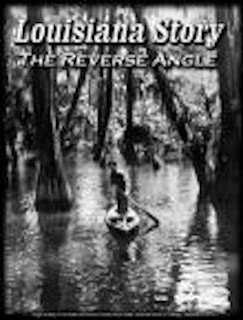
The Louisiana Story was more of a docu-fiction.  A propaganda film created by Flaherty for the Standard Oil Company, illustrating the virtues dropping wells all over the Louisiana bayou. 


So, Arion and I, along with Mac Dara and Kay, our production manager, traveled down to Avery Island, near Lake Charles, Louisiana, to interview the star of that film. 

The island held the locations for several scenes in the film.  It is also the home of Tabasco Sauce.  No matter where in the world you see it on your table, it came from Avery Island.   It was on their property we that we were filming, so, we stood in 90% humidity, in 90-degree shade, learning all about Tabasco sauce from the company’s historian.   

Avery Island is one of the weather locations on my phone.


The lead character in The Louisiana Story was around 12 when the film was made.  Now, he was in his 60s.  He and his wife were absolutely charming.  They lived in a small white trailer, surrounded by dozens of chickens, which made for a very lively audio track. 

Mac Dara interviewed him about the making of the film and then we drove to the site where, in the film, he allegedly fought with an alligator.  I filmed a few alligators, turtles and spiders of my own to mimicing some of the shots in Flaherty's film.

A few days later, we were to head up towards Ottawa to film Flaherty's granddaughter and then further north to Igloolik, deep within the Arctic Circle.

On occasion, the Canadian government can be fairly strict when it comes to working and filming permits, which I found out late in the game, had not been obtained.  After some heated discussion, it was decided we would cross the boarder as tourist/filmmakers, rather than an actual crew.   In the future, I sincerely recommend getting the permits to avoid any hassles and the very real possibility of being sent back home at your own expense.

Igloolik is a small village in the northern most part of Hudson Bay.  It took us three flights to get there and at each leg of the journey, the airports and the airplanes, each got much smaller. 

It was early spring, so the temperature was a hearty 20-degrees.

A few weeks prior to the trip, Kay informed me that the local food consisted of fish and decayed walrus meat.  As I am allergic to fish and thought of walrus was iffy, I packed plenty of instant soup and energy bars.  Upon arriving, we toured the town and found their local market stocked with every product Oscar Mayer and Sarah Lee, ever sold.  

Food was no longer an issue, although, clothing still was.

The local Inuit people are quite used to the cold and laughed when they saw what we considered to be “extreme weather” clothing.  I don’t remember the exact word they used, but “gringo” would be a safe substitute.


A short while later, Kay arrived with special cold-weather coats, pants and boots for our journey out onto the ice.  The coats were big, bulky with a fur-lined hood and remarkably warm, like the type you’d see in National Geographic magazine.  Apparently, many geese gave up their feathers for our comfort and safety.


Our sled, little more than a plywood box on skids, sat about 60 feet off the shore, tethered not to a team of huskies, but to a snowmobile driven by our guide, Jason Kannuk.  As the rope became taught, we jerked into motion, bouncing over large ice shards and crevices broken only by an occasional glide through a large, turquoise pool of water.  All very exciting in the beginning, but a bit tiring as the hours moved on.


Mac Dara wanted to film seal and walrus at the edge of the ice and although we saw many off in the distance, they all made a quick escape through small holes in the ice as we approached.  We settled for filming our guides fishing for Atlantic Char in the icy waters of a snow-banked stream on a nearby island.  Still, quite dramatic and preferred over the clubbing of seals.


For this leg of the journey, I chose to bring the Sony EX1 and a smaller Manfrotto tripod.  Space was very limited on the smaller aircraft and as usually, I refuse to check my cameras into cargo for safety reasons.  Although the camera returned stunning images, it was perhaps the wrong camera for this particular occasion.  The bright ice made it difficult to focus using the camera’s monitor and the rear viewfinder was not yet improved as it has been on the EX1R.  At times, simple shooting was a bit of a challenge and I longed for the EX3's viewfinder and long lens capabilities.


The upside of filming in the arctic this time of year is that the sun continually remains in the sky 24 hours.  Our production day was endless.   Unfortunately, our energy was not and at one point, after schlepping camera and tripod through snow up to our waists in winds upwards of 30 mph, Arion and I were exhausted.  Partially, from laughing about it.

After one additional, 20 minute interview, we bid our friends goodbye, got back in our sled and made the three-hour journey back to the village.  The bumping across the ice seemed endless, but we finally reached the shores of Igloolik.  A warm shower, a hot meal and we hit the sack.

The documentary is near completion and will be aired on the BBC and many other stations around the world.   I’m really proud to have been a part of it.

On really cold days, Sarah and I laugh about the fact that it is probably colder in Igloolik and she pulls out her Iphone to prove it.  Even though we are heading into the warm days of spring, I still miss that arctic explorer coat.

www.duckyou.com
www.duckem.com


Monday, March 29, 2010

On Safari: In New Jersey


I admit that I am envious of some of the wildlife filmmakers I’ve seen on Nova, Discovery and Nat Geo, chasing down wild game with 800mm lenses mounted on the open roof of their well-worn Range Rovers.  So, any time we get a call to shoot the animals at Six Flags Great Adventure & Wild Safari we jump at the chance.  Wild Safari is the largest safari park outside of Africa.

Now, of course I’m not comparing the challenges of the bush or open Savanna to the comfort and control of a New Jersey theme park, still, the thrill of seeing lions, tigers and bears, along with giraffe, rhino and zebra filling my viewfinder can be pretty exciting and just as intense.


Today's assignment is to gather new B-Roll for the park's press reel.  B-Roll is essential to producers and reporters creating stories about the park.  They come to the park, do a few interviews and walk away with a half hour tape of animal shots that they can have their own editors whip into a story.

It is not uncommon for our images to show up in dozens of films, all over the globe, every year.  So, the B-Roll for the Safari Park, Great Adventure theme park and the Hurricane Harbor water park must constantly be replenished with exciting new images that reflect what you can experience at Six Flags.

We set out with the park’s chief veterinarian, Dr William "Doc" Rives to create a behind-the-scenes "Wild Safari Tour” film.  Although most of the animals seem undisturbed that we are driving among them, we are assured that many of them are still wild and as soon as we step outside the vehicle, we are invading their territory.   Strict rules of conduct must be followed.

"When I say get back in the vehicle, I mean it" Doc says without a smile.  "Some of the animals are very territorial and there are also a lot of new babies, so the mothers will be extremely protective."


It wasn't long before his words rang true. A 7 foot tall ostrich approached the truck, feathers ruffled and pecking at our windows.

For today's shoot I am using my Sony EX3 with a variety of Nikon lenses.   Using telephoto prime lenses gives me an additional magnification with incredible sharpness and very low depth of field.  By staying back from a herd of animals such as the zebras, which are naturally skittish, I can still observe them up close and undisturbed.  The waves of heat off the ground and the low depth helps maintain the illusion that our subjects are out in the wild and not confined to the park.


I've also brought along my new NX5U so that I can change cameras quickly.  I've done some test with the camera and I've been pretty happy with the results.  I've found that if I set my camera profiles with a slightly lower gamma and saturation the files cut together nicely with the XDCAMs  and because of its lower weight (and cost), I feel more inclined to mount it on the hood of a Jeep heading off-road.  The AVCHD format allows me to shoot up to 11 hours using the FMU128 flash drive.  Don't leave home with it.

Both cameras have mounting plates that will work on my 519 fluid head which I have mounted on 545B tripod both from Manfrotto.  The combination is quick to set and fairly steady with telephoto lenses up to 1000mm.  The 545 legs open and level very quickly, which is important as we need to get in and out of our car rapidly.  It's also affordable, so I can own more than one, add accessories like additional camera plates, spreaders and carrying cases without having to mortgage my home.


Of course, some of the animals, such as the big cats do have to be confined in large pens and safety rules require me to film them from outside their cages.  Here again, using a telephoto lens or the camera’s zoom lens at its farthest setting, will make the fence all but disappear. Close ups of lions, tigers and bears (oh my) are now much easier and safer to accomplish.  The low depth of field makes focusing a bit of a challenge, yet, the results outweigh any difficulty I’ve encountered.

As a side note: 
It is important to use the widest iris (aperture) setting available to you, as the links of the fence will begin to show up if you stop the lens down to 5.6 or beyond.  I have also found that the Sony EX3’s kit lens loses a bit of sharpness when using settings higher than 5.6 and I tend to use the camera’s internal ND filter or a third party filter to reduce light entering the camera.


We return home from our shoot to the comfort of a hot shower and our own bed.

In recent years, Sarah and I have gone to much larger, African safari parks while visiting Kenya yet, we still find the Wild Safari Park at Six Flags to be one of our most fun adventures.  We love it!

Visit our website to see more.

Chuck featured on Sony VideON
www.duckyou.com


Saturday, March 27, 2010

"You Have 2 Minutes!"

A few days before I left for Kenya, Sarah and I had the pleasure of filming a short video clip for designer John Varvatos.  The company that represents his fragrances was having their annual sales meeting and as he was unable to be there in person, he requested this video to thank everyone for helping his brand grow while others suffered the difficult economy.

I've had the opportunity to film or photograph many well known personalities and performers over the years.  Names such as Ray Charles, Bruce Springstein, Stachy Keach, Allen Ginsberg, Bill Charlap, Walter Cronkite, Yoko Ono, Billy Joel, Isaac Hayes, Bono, Gabriel Byrne and even the great Mickey Mantle are just a few of the personalities that I've been lucky enough to see through my own camera's viewfinder.


Some of them were fun or interesting to work with, while others were a bit more challenging and on occasion, the talent's assistant or agent was more difficult than the talent.  

"You have two minutes" one assistant barked, once while I was photographing Fred Wilpon, a part owner of the New York Mets baseball team.  I was all set up and ready to shoot when Fred started asking me questions about photography.  This led to a discussion on how he came to own the Mets and a half hour later we wrapped.


Admittedly, other sessions were not as relaxed.  While being interviewed for Amnesty International, Yoko Ono was fairly strict in regards to the type of lighting to be used (she specifically requested three Chimera soft boxes) while Billy Joel just scowled at the camera the entire shoot.


Whether it's a rock star or the CEO of a pharmaceutical firm, the last thing we want to have happen is an unnecessary delay while the talent is already on set.   Nothing looks (or feels) more unprofessional than searching through your bags for an accessory or standing there fiddling with your camera's menu while your subject is growing even more anxious in their chair.

Sarah and I often rehearse our set up before a gig by discussing what gear we will be using and in which equipment case it will be located.  With five bags and twenty-two pockets, it's easy to play "Where's the lens cleaning cloth" or  "Did you bring that adaptor?"

Because we do both video and photography, some gear, such as light stands, super clamps, extension cords, gel filters and the like get moved around into different bags and it is important to run through a check list making sure everything is where it should be.  Forgetting a simple item like a tripod plate or the tiny screw that holds it in place, can lead to a disastrous shoot or at the least, suffering the embarrassment of having to use gaffers tape to hold you camera in place.

"Wouldn't this shot look great hand-held?"

Another consideration that we prepare for is whether the talent will be able to speak off the cuff, or will they need cue cards or even a tele-prompter.  If it's an interview, the talent is usually responding to questions being posed by Sarah or someone else, but in the case of someone making and announcement or addressing their employees, it is good to know if they are comfortable in front of the camera. This is something that we always try to discuss in advance with our clients.  Even a simple paragraph can be a mountain of anxiety for someone not use to speaking without a script.  


To our delight, John Varvatos was a gracious host.  Although we had brought along a full lighting kit, John's office was bathed in beautiful natural light and with his rock memorabilia as a background, it was beautiful thing.  We set up all our gear outside his office and when given the "go", we moved everything into place, tested the audio and rolled tape.   John was very relaxed in front of the camera and after two brief takes, the message was complete.

As we were packing, John came by and thanked us for making it easy for him.

In truth, it was the other way around.

www.duckyou.com
Chuck Featured on Sony VideOn
www.duckem.com

Monday, March 22, 2010

Kenya; Day Four and Five

The trouble with travel is that as soon as I become acclimated to my destination, it's usually time to go home.  This time I was anxious to return to the states.  I had done all I could do in the allotted time and the bulk of the work would be done by others using the photos and video that I have created.

Regardless of the project that Sarah and I are working on, we always seem to come home with the feeling that we could have done more, but this was not a commercial shoot or a reality show.  We did not take out permits to stop traffic or hire actors to reenact true life stories.  This was life in progress in at an orphanage in Nairobi and for a few days I was able to experience a small part of it.

The last few days were spent interviewing some of the kids about the things they like and what they wanted to be when they grow up.  Some wanted to be teachers, others doctors and a handful wanted to drive or repair cars.  "Automobile" is a beautiful word when spoken in Kenyan English by an 8 year old.

The kids loved seeing themselves on the video camera's monitor and they were even more excited when I let them look through the camera and film each other.  After a short lesson, ten potential filmmakers were filming each other singing songs and making faces for the camera, no differently than your kid would be doing, here in the states.

The things that would normally make me anxious on the return flight home, seemed quite trivial compared to the living conditions I had just witnessed and I felt fortunate to be aboard a jet fly home.  

I've said this before, yet it rings even truer today.  I often don't feel the impact of where I've been until I return home.  Then, surrounded by all my stuff in the comfort of my own home it hits hard.

I have gone on about the gear I've had the opportunity to use for this project but the bottom line is that I hope the resulting images will help to create positive and effective awareness for the kids of Rehema Home, because it is only through the love and kindness of others that these children have survived.

Their faces say much more than my words.


www.rehemahome.com
www.duckyou.com

Thursday, March 18, 2010

Kenya; Day Three: The Roads

Driving in and around Nairobi is an extreme sport.  For many travelers, the transportation system is made up of small vans called Matatu.  The Matatu drivers will advance through traffic at all costs.  They will pass each other while speeding down the dusty, rut-filled highways, flashing their lights as they speed towards you, head on, in your lane.  Traffic lights appear to be optional and the roads are shared with large trucks spewing black diesel, men pulling heavy carts and goats.


 It was around 11 am and we were heading across town to interview Dr. Joseph Mophat Kilioba, the Bishop of the PEFA Church Doonholm.  The Bishop had been instrumental in helping form Rehema Home and it was apparent that he was still very passionate about the orphanage.


Traffic in Nairobi is absolutely stupid.  Dangerous roundabouts every mile or two with cars, trucks and buses refusing to give way to each other.   There is much improvement of the roads going at the moment, so things were backed up even more and the normally quiet back roads were now choked with heavy traffic.

The amazing thing was the absence of horns.  If this was the entrance to the Lincoln Tunnel, the horns would start blasting immediately.  The drivers were aggressive, but I hardly heard a beep.

We were in an area that was considered middle class, yet it still looked like the worst area of most cities I have visited.  Decaying concrete and stone buildings, dirt roads, children and animals running everywhere. 

A guard waved to Johnathan and instructed us to pull into a yard filled with children in bright blue uniforms.  Labor is very cheap in Kenya and many homes, office buildings and factories are surrounded by high walls or fences and men are employed around the clock to protect the premises.

One of administrators of the church showed us around the building and introduced us to each and every teacher.  They were extremely proud of their school and rightfully so.

The Bishop welcomed us warmly.  He had known Johnathan since he was a boy and he spoke a bit on the current state of Nairobi and of the difficulties and importance of Rehema Home.

I had brought along a small carbon fiber tripod from Manfrotto called a 055CXPRO3.   That’s a lot of numbers for just three legs, but it was the perfect number for this trip.  The tripod easily fit in luggage and I brought along a 501 fluid head for the video and a ball head from Gitzo for the stills.  

Although I do a fair share of hand holding my cameras, I prefer to use a tripod when possible.  I like shooting with with longer lenses and for that, a steady foundation is essential.    This set of sticks was strong enough and light enough to be handy all day.

The interview set up was intentionally light weight.  Window light with the Lite Panel MircoPro to subtly fill in the shadows.  I used a Sony ECM-77B lavaliere mic and the buds from my Iphone to monitor the audio.  The PCM audio from the NX5 is incredible.  It was a production kit in a bag.

We headed back to the orphanage, bumpy and bouncy along the dust filled roads.

Every day at around 3pm, the jet lag would kick in and we always seemed to be driving when it would come over me.  The bright, warm sun, the diesel fumes and the traffic was the perfect recipe. 


We arrived back at Rehema Home about an hour later.  I wanted to photograph the kids for a while and then head back to the guesthouse to sort through the tons of images. I had already shot over 2,000 stills at this point and it was time to take a break and get some quiet time for myself.   I skipped dinner and set up the computer to download my cards. 

As it was Nairobi, it is not uncommon for the electricity to go off at any time.  As soon as I sat down to work, boink, it was gone.  I set up one of the Lite Panels on a clamp and dimmed to its lowest setting, it was more than bright enough to work for hours on four AA batteries.  Fun!  I felt like McGiver.


As a visual artist, I rarely know where I’ve been or who I’ve met until I look back at the pictures.  

I believe that I have fallen in love with each and every kid at Rehema Home and am photographing them much more than necessary.   I love their smiles and I find that I am photographing them as if they were my own. 


I reviewed the footage from the NX5U video camera and it looks and sounds great and I am hoping that I have enough stuff for a small documentary on the Rehema.  I was impressed with Lance’s photos in the slums and I am hoping that my video work does as much justice as his stills.

I scanned through hundreds of images using Lightroom, occasionally stopping to check focus or adjust expose.  The Nikon D3 is an amazing camera and the detail is just amazing. 
   

In a short while, everyone is back and the silence is broken. 

The room air is stale as the windows remain closed to keep the mosquito at bay.  Nairobi is high on a plateau and malaria is rare at this altitude. Nonetheless they’ll bite the piss out of you if you’re not careful. 

And it was only on the last day that I would find out that the mosquito nets were ineffective against the bed bugs.